%20Logo.png?width=100&height=100&name=brs%20(Bow%20River%20Solutions)%20Logo.png)
Docker: Accelerated Container Application Development
Docker is the leading open-source platform for accelerated container application development—helping teams build, share, and run container applications with speed and consistency.
By separating applications from infrastructure, Docker reduces operational friction, improves reliability, and delivers measurable gains in performance, portability, and cost efficiency across any environment.
Docker’s Role in Modern Data Ecosystems and Cloud-Native Architecture
Docker is an open-source platform that enables developers to build, deploy, run, update, and manage containers with precision and consistency.
By packaging applications and their dependencies into portable container applications, Docker ensures reliable behavior from development to production.
This remains true regardless of operating system, environment, or cloud provider.
This standardized approach makes Docker essential for cloud-native engineering, microservices architectures, and distributed data ecosystems.
In today’s hybrid and multicloud environments, Docker empowers teams to build, ship, and run container applications that scale efficiently, integrate seamlessly with CI/CD pipelines, and support high-density workloads.
Its lightweight, isolated containers maximize resource utilization, reduce deployment friction, and accelerate release cycles.
As a result, Docker strengthens modern analytics platforms, AI/ML workflows, and enterprise data strategies that demand agility, portability, and operational efficiency.
Key Features & Capabilities
Docker delivers a unified, open-source platform for accelerated container application development—equipping teams to build, deploy, run, update, and manage containers with consistency and confidence.
Its integrated toolset strengthens collaboration, improves security, and streamlines the entire development lifecycle.
-
Docker Desktop: Develop and test container applications locally with a powerful, unified environment. Built-in Kubernetes and Docker Compose simplify setup, boost productivity, and help teams iterate quickly and collaborate seamlessly.
-
Docker Hub: Access, organize, and manage container images through the industry’s largest repository. Pre-built Trusted Content accelerates development, while version control, automated builds, and verified images ensure security and consistency across teams.
-
Docker Scout: Improve your software supply chain with continuous security insights. Scout identifies vulnerabilities, validates compliance, and provides actionable analytics to optimize performance and maintain secure, reliable containerized applications.
-
Docker Build Cloud: Accelerate builds using cloud-powered infrastructure. Integrated with CI/CD tools like GitHub Actions, it scales dynamically, improves reliability, and reduces build times for complex applications.


Business Benefits
Docker delivers measurable impact across the software development lifecycle.
It combines accelerated container application development with significant financial and operational gains.
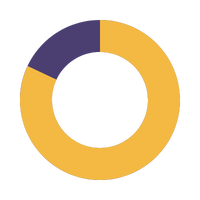
As the industry’s most widely used container platform—holding 82.84% market share—Docker simplifies complex, multi-language development environments.
It also boosts developer productivity by 6%, enabling teams to build, share, and run container applications with greater speed and confidence.
Organizations realize dramatic efficiency improvements.
These include a 3-× reduction in servers due to higher VM density and a 3-month improvement in time to market, accelerating revenue generation.
Independent studies show Docker delivers a 126% ROI and $66.9M NPV, underscoring the platform’s long-term value.
By standardizing workflows, reducing operational friction, and improving consistency from code to cloud, Docker strengthens innovation and scalability across modern, distributed environments.
Docker Use Cases Across Industries
Docker supports the modernization of software and data ecosystems, enabling organizations to build, share, and run container applications that scale with precision across diverse industries and environments.
-
Cloud Migration: Docker simplifies the movement of applications, data, and workloads across on-premises, cloud, and multicloud environments. Canadian innovators like Exodus Orbitals use Docker to operate reliably across cloud and space-based edge systems.
-
Microservices: With more than 85% of enterprises adopting microservices, organizations such as L’Oréal transition from monolithic systems to container-first architectures, improving agility and achieving 25% cost savings through independently deployed services.
-
Continuous Integration and Continuous Delivery (CI/CD): Docker standardizes testing and deployment environments, reducing errors and accelerating releases. Siimpl demonstrated this impact by cutting build times by 90% using Docker Build Cloud.
-
DevOps: Companies like JWP adopt Docker to support rapid iteration, continuous experimentation, and streamlined collaboration between development and security teams.
-
Hybrid & Multicloud: Docker runs consistently across on-premises, private cloud, public cloud, and edge environments. Canadian companies such as Exodus Orbitals depend on this flexibility to deploy workloads across hybrid and distributed systems.
-
Containers as a Service (CaaS): SaaS, fintech, and enterprise software providers rely on Docker-enabled CaaS platforms to deploy and manage large-scale containerized applications. Companies including Kapa.ai use CaaS to deliver scalable, cloud-based AI services with consistency and speed.
-
AI/ML: Docker accelerates artificial intelligence and machine learning with fast, portable environments for training and deployment. Ataccama advances its AI delivery with container-first workflows, while Walmart Global Tech streamlines ML experimentation and model consistency using Docker-powered environments.


Integrations & Compatibility
Docker lets developers shape their ideal environment by integrating third-party tools directly into their workflows.
Extensions can be explored through Docker Hub or the Extensions Marketplace in Docker Desktop, making it easy to expand functionality with trusted, pre-built capabilities.
These integrations connect seamlessly to development and deployment pipelines, improving Docker Desktop with advanced debugging, testing, security, and networking features.
Teams can also build custom add-ons using the Extensions SDK.
This creates highly tailored environments that support faster, more efficient container application development.
brs + Docker = Containerization
brs helps organizations accelerate container adoption by implementing and optimizing Docker across cloud, hybrid, and on-premises environments.
Our team streamlines development workflows, strengthens security, and improves deployment consistency using Docker’s modern tooling.
With deep expertise in containerized architectures, brs enables faster delivery, reduced complexity, and higher performance across the entire application lifecycle.
Accelerate Your DevOps Journey
With Docker and brs, organizations across Canada and North America strengthen their DevOps maturity, especially when building scalable, cloud-ready microservices architectures.
Turn Your Data into Insights.